Tag: Canberra

  • Canberra City Planning – cycling

    I get on my bike as often as I can. This can be tricky with three kids but my older two are competent cyclists and my youngest is very easy to put into either of my three options – front seat, back seat or trailer.

    Having a bike trailer is a game changer for a mum – probably for anyone, but it makes a family so much more portable on bikes, increasing crucial lugging capacity, and, I have found, is well worth the investment!

    So, we cycle around town as much as we can.

    This is one benefit of living in the inner-north that I would not want to give up in order to settle out in one of Canberra’s sprawling suburbs. Being able to cycle to events, the pool, the library, the supermarket and friend’s houses enhances our lives is worth the sacrifice of extra space for a large garden. We are satisfied with our small one (which is jam-packed with veges) and more than satisfied with being able to walk and ride to close-at-hand amenities and luxuries, rather than guzzle up fossil fuel (and extra time) to get there.

    So my cycling around town is an urban planning matter. It is closely linked to how we build our cities, how we are building Canberra.

    Canberra is about as good as it gets for commuter cyclists in Australia. This is unfortunate because Canberra could be better. Fortunately, from what I can gather, ACT’s current government does seem to be pro cycling and active travel, pro medium to high density in parts  (personally I am more in favour of medium density over high density in this city) and, I am hoping, also in favour of creating human scale, hospitable, fun and friendly public spaces. These things are all key to creating equitable, friendly cities where people do not have to rely on a car to get around.

    In my cycle from Dickson, through O’Connor, into Civic and on into the Parliamentary Triangle and back again I encountered a range of cycling conditions. From my house I have to cross a busy intersection. This can be a little frightening with a 7 year old dare devil who loves to scream down the hill, “check your brakes!” I often call to him, not that it makes any difference. Then it is a squishy ride down a narrow but fairly quiet path to the main riding throughfare which runs from Dickson College right into The Australian National University, and on to Lake Burley Griffin, where offshoots can take you into various southern suburbs along idyllic rides by the lake. This path took me just a few block from the city centre where, after navigating a couple of less than desirable paths (caused by tree roots, so I won’t complain, I’d rather have the trees) I easily parked and did some grocery shopping.

    This leg, my friends, was a journey easier than a car trip in peak hour and having to find and pay for parking in some of the storied car parks attached to the shopping centre. It included the added bonus of feeling the wind in my hair and a particular feeling that I was truly alive! If there is any feeling closer to flying than actually flying do tell because riding on a hotmixed Canberra bike path on a bike feels as much like it as I’d care to know!

    After this we went on to the triangle where I made sure to take the Eastern bike path along Commonwealth Avenue bridge so that I could slide off onto the bike path taking me (along with twenty-odd mums with prams and various joggers and people in business attire) right to the back end of the National Gallery where I parked my bike and took my bonny daughter in to their excellent play space.

    Canberra-Cycling-Mum (1 of 1)


    Truly, being a mum of a little one in Canberra does feel positively utopian at times!

    The journey back home again was equally straightforward, except for finding a new, quieter, route home through Reid, which is yet another joy of cycling – adaptability and adventure.

    There is certainly room for improvement in Canberra, living location is certainly one important factor to being able to make this choice. My point is that it is definitely, in my eyes, a choice worth choosing. I prefer this mode of travel above all else!

    As Steve Jobs is attributed as saying: A bicycle is the most efficient form of transport. It is also, I argue, the most fun.

  • Linburn Handmade

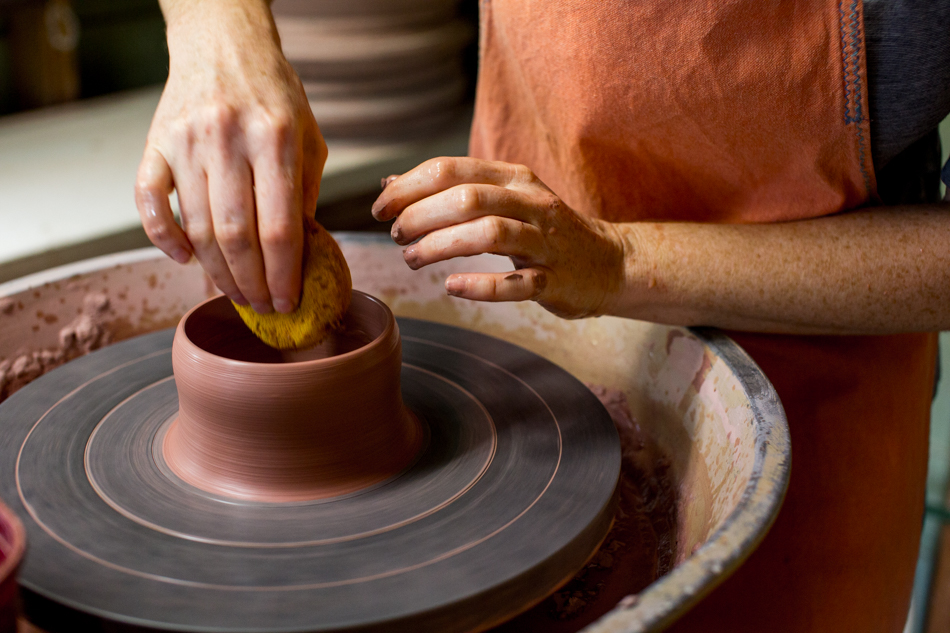
    I interviewed ceramicist Georgie Bryant on her work under the label Linburn Handmade, a copy of which appeared in Canberra City News (21/02/2018).


    In her lovely backyard in Canberra where she works out of her home studio Georgie tells me that her ceramics studio, Linburn Handmade, is about providing functional, domestic ware that is contemporary, earthy and honest.

    My focus has always been that ceramics can be beautiful but it is also really useful. I like that clay is so everyday and functional. It’s practical, and what I want to give people is something that looks good and that they can use all the time,” she says.


    I wouldn’t say my pots are heavy and hefty, but there is a strength there, without them being too fine, I always try to balance beauty and function.”

    Turning her ceramics practice into a business was an organic process. After moving to Canberra for work she took up a pottery class at the Watson Arts Centre. She was struck and developed a passion for pottery which soon saw her working with a production potter before starting her own business.

    “I quite enjoy getting the detail right, the size and the form, which you need to do if you’re going to do production pottery,” she says, telling me that it becomes quite rhythmic over time.

    The name, Linburn, is a nod to her childhood home near Mudgee, NSW, where she was surrounded by her mother’s cherished porcelain and learned to make things with her father.

    “My dad is probably at the root of all this, unknowingly. He’s a really clever guy who can manufacture anything. He’s a farmer, and learned to build all sorts of buildings around New South Wales with his father when he was a young man. I couldn’t help but learn from them that I wanted to make beautiful and useful things.”

    The location still features in her practice, as she has been known to dig clay from the area to use in her pots, “there’s some nice clay out that way,” she states and I can tell that this passion for good clay and fine pots runs deep, as her eyes light up as she speaks.

    With a few large commissions in recent years it seems that interest in local, handmade ceramics is making a resurgence, something that could be related to a change in how food is thought about.

    “Food has gone from being something that we eat, to something that we talk about, look at and photograph. It seems to be everywhere and – I would say this as a potter,” she laughs, “but it seems that the natural progression is to ask, ‘if we care about what we’re eating, what are we eating it off?’ It could sit anywhere along the spectrum of being something mass produced overseas or handmade locally”

    I agree and we talk about how the slow food movement seems to have instigated a slow-made movement and we laugh over how this has almost intersected in our very plates as handmade ceramics merges with locally and mindfully produced food in our restaurants and cafes. It appears that Georgie’s work is an allegory for our times.

    Canberra’s dining scene is replete with passionate foodies, something which resonates with Georgie as she matches her passion with theirs and has no problem meeting their creative ideas with their own to come up with the perfect, unique solution for their tableware.

    The creative process is kind of fun. There’s a hunt for the right design, the right glaze and how it’s going to look.

    I’ve stood in cool rooms with chefs, looking at pork knuckles, to understand what is going to go on the plate. They are all about the food being right and I’m all about the plate being right and then we have an overlap where we have to be right together which is not just technical, it’s got to be affordable, I’ve got to be able to reproduce it, it’s got to be attractive and it has to make sense with the food.

    It’s like a puzzle and I enjoy working with others and challenging myself as well.”

    In the end, she says, “It’s sheer delight when I wander past one of the restaurants where my plates are and see people having a nice time, maybe not everyone is thinking about the plates, but it’s all part of the picture.”

    Georgie can be contacted for commissions and sales through www.linburnhandmade.com, she also stocks ceramics at the Watson Arts Centre, www.canberrapotters.com.au.

  • Citified Exhibition

    citified-exhibition-web-92-of-188

    Rosy Wilson’s debut exhibition was held at the niche Anvil Design Studio in the hipster hub of The Hamlet. Sadly this well-loved nook has been bookmarked for development ‘upgrades’ which will see Canberra’s alternative crowd yet again bumped…but don’t worry, it’s so good, it’s reincarnating.

    citified-exhibition-web-32-of-188

    Rosy’s Citified focuses on the fashion capitals of the world, New York, London, Milan and Rome with Sydney, Venice and Wellington also getting a look in.

    citified-exhibition-web-65-of-188

    As an architect Rosy’s interest in cities is natural but her paintings veer away from merely harsh, architectural lines by involving a human element through figures in the motions of daily life, softening the built environment and drawing the viewer into the action of city life at eye level. In her cities life is good, the sun shines and buildings are resplendent in the acrylic coating she has given them.

    citified-exhibition-web-109-of-188
    Favourites are the glint of light reflected off a passing London cab, reflections in the glass of a New York office block, the azure of a Wellington sea with tiny figures enjoying a sunny day and the relaxed atmosphere of a Sydney waterfront.

    citified-exhibition-web-57-of-188
    One can not help but feel somewhat cheery and optimistic after seeing cities beautified in her paintings. They are clean, friendly and assertive. It is refreshing to see an artist with such lack of pretension and obvious talent drawing our attention to what is positive in the world.

    citified-exhibition-web-187-of-188

    You can see Rosy’s work here and connect with her on Facebook or Instagram to keep abreast of upcoming work and exhibitions.


  • Last day of infancy

    Sophia’s launch into school means we enjoyed her last day of infancy (for lack of a better term – though I guess this is as correct as any). I thought it was important to do something special to mark this day and so we went along to Weston Park in Canberra. I am so glad this park remains, thriving well into the 21st century. It is a very solid park and has remained uniquely popular over many decades. I remember there used to be an old ‘mouse house’, a large cubby house with tunnels and nooks and windows in all sorts of places. I remember crawling through these along with hoards of other children, I was very sad to learn it had been torn down, but the decision to keep this water park was welcomed. I have a photo of me at my first birthday sitting in the central ‘bird bath’ and I took a photo of Gunther on his first birthday also in the bird bath. On this visit I noticed half of the bird bath had fallen (or been torn) off, the only significant damage done in all these years.

    The wading pool has also been rejuvenated with a new path and sculptures and a slight redesign. When we were there we were the only ones (as ACT schools had gone back that day, we had one more day to go in NSW) and so explored the new features happily.

    I only had my phone on me at the time (as it’s often welcome to have a break from lugging my big camera around), so phone pics are all I have today.

    Weston Park002 Weston Park003 Weston Park004 Weston Park005  Weston Park007 Weston Park008 Weston Park009 Weston Park010  Weston Park012 Weston Park013 Weston Park014

  • Tidbinbilla

    For a very long time I’ve been wanting to make the easy and stunning drive down to Tidbinbilla in Australia’s Capital Territory.  Not just Tidbinbilla, but the entire surrounding landscape is one of my favourites.  Nearby Corin Forest is the stomping ground of the new-ish festival of Corinbank, and when it is not hosting said festival it is a popular family picnicking spot with a cafe, flying fox, toboggan ride and water slide with kangaroos and the odd bit of wildlife moseying about.

    Namadgi is a hop, skip and a jump away as well. The harsh beauty of Namadgi guts me every time and I can barely speak when I see it. It is a striking contrast to the groomed and tame city of Canberra. All I can do is absorb.  There is a haunting loneliness to Namadgi.  The ancestors of the original Australians seem to hang here, at least I feel it and it’s not very scientific or logical, is it, but who can really judge?

    As my dad says in all his wisdom: ‘we know nothing.’

    Anyway. Tidbinbilla: Finally we jumped into the car and had an all too short visit to this great ‘animal park’ as we were calling it. After a bit of traipsing around we were rewarded with many an animal sighting. After the Emus and Kangaroos at the park, the elegant Brolgas were our first find, stalking about on their long, crane like legs – in fact they are Cranes, Australia’s only one. After reading Olga the Brolga by Rod Clement I am a fan of this bird. Next up were many birds: Magpie Geese, Australian White Ibis, Water Hens, two very large Pelicans who were sunning themselves on rocks in the middle of the lake, a Red-Belly Black Snake, many lizards and a water dragon and most exciting were two – two! sightings of the shy and very elusive Platypus (whose name has no confirmed plural), the very first real live platypus I have every seen.Tidbinbilla0001 Tidbinbilla0002 Tidbinbilla0003 Tidbinbilla0004 Tidbinbilla0005  Tidbinbilla0007 Tidbinbilla0008 Tidbinbilla0009 Tidbinbilla0010  Tidbinbilla0012

  • Canberra Red Brick

    In Yarralumla there is an old brickworks. This brickworks enjoyed its heyday somewhere between 1913 and 1976. Today it is closed for business, though the recycled timber merchant, Thors Hammer, operates out of the ramshackle old building.

    When I was a wee lass most of the houses around Yarralumla were that trademark red of the bricks from ye olde brickworks down the way. As I grew into my teens they began to drop like flies and they are still dropping. My Nonna’s place is one of the last.  She is the embodiment of the neighbourhood that once was; industrious Europeans living in their 3 bedroom houses with their 3 -4 kids, growing bountiful kitchen gardens and enveloping their blocks with friendly hedges.

    There once used to be no T.V. Do you remember this time? It was not so long ago. My Nonna was reliving those days in my company recently.  Apparently the whole street (or a good portion) would exit their homes and gather at one of these tiny houses for evenings of frivolous fellowship and good strong coffee (those good Europeans brought their coffee and their wine drinking to our sunburnt land), apparently the art of talking about the weather was refined back then and nothing dull about it, I guess it would be if you couldn’t just google it. Maybe they used to take bets.

    I hope, hope, hope at least a few of these iconic houses last into future centuries. If they cannot carry their culture with them – that culture of neighbourhood conviviality and togetherness – then they can serve as a relic of Canberra’s heritage.

    My Nonna’s house is past its prime. My Nonno was the gardener and had avenues of grapevines wherever he could fit them.  Two impossibly, tall and inconveniently placed Sequoias stood in the front yard and many more fruit trees were growing and thriving and producing bountifully. I remember it being a little bit more of a jungle, though everything had its place, this could well be that I was much smaller back in the day. He kept three beehives, several hens, several more free ranging pigeons (of which nothing was done to or about, they were simply transitory guests, fed and housed) and had a large food producing garden and several more berry bushes.

    It really was a suburban oasis.

    With time comes age and the shed is drooping, the cubby house is boarded shut (and I daren’t enter), the chimneys represent fireplaces, but these are no longer in use.

    But it still stands and there is still beauty all around, an unsculpted, natural beauty which I think those tiny over-landscaped gardens often lack.

    There is one thing (among other things) that remain and that is those warblers, the Australian magpie. I vividly remember waking up in my mum’s former bedroom on a sleepover one day to the sound of that beautiful native cockerel crow, I thought it was an exquisite way to wake up. My Nonna is forever feeding the birds and they still come in their dozens and they still warble outside the windows waiting to be fed.

    Red Brick House0006 Red Brick House0007 Red Brick House0008 Red Brick House0009

    The garden, it still grows.Red Brick House0018 Red Brick House0011   Red Brick House0019  Red Brick House0021Red Brick House0010

    (The Cellar, where my Nonna made his own wine.)

    Red Brick House0022 Red Brick House0023

    And the house, it still stands.  But some of these rickety structure are slowly returning to the soil with the grace of old age and still with the handprint of their maker all over them.

    Red Brick House0012 Red Brick House0013

    Red Brick House0016 Red Brick House0017

    The former vege garden, returned to grass.

    Red Brick House0014

    Monolithic, modern structures dwarf their predecessor, having crushed its neighbours.

    Red Brick House0015  Red Brick House0024 Red Brick House0025 Red Brick House0026 Red Brick House0027 Red Brick House0028 Red Brick House0029 Red Brick House0030 Red Brick House0031 Red Brick House0032 Red Brick House0033 Red Brick House0034 Red Brick House0035 Red Brick House0036

  • Canberra’s Arboretum

    When we were last in Canberra we went twice to the National Arboretum, which is fast becoming one of Canberra’s star attractions.  It was conceived of and established during Jon Stanhope’s time at Canberra’s helm following the 2003 Bushfires. Arguably, it was his governments greatest achievement.  Policy comes and goes and changes, but trees tend to hang around for a bit longer. Generally. We hope.

    Apart from the many tree plots within the park which showcase a variety of trees from around the globe, there is an outstanding visitors building. I love this building because it is full of elegantly curving wood and is spacious and airy.

    I love wood.

    I love wood when it’s in a living tree.

    So I love the Arboretum. Or, I love what it is growing into.

    Pod Playground. That is the new kids area next to the visitors centre.  It is, hands down, the best playground I’ve been to or at least taken my kids to. It is not completely adult friendly – which is what makes it totally amazing for kids. It takes the kids up into the sky, away from the adults below, through kid-sized tunnels and acorn rooms and down a couple of steep slides.

    The Banksia seed pod rooms house dingy-dongy things for kids to bang on. It again is kid friendly rather than adult friendly with doors only so high. Perfect.

    2013 7 14 Arboretum00162013 7 14 Arboretum0013 2013 7 14 Arboretum0014 2013 7 14 Arboretum00152013 7 14 Arboretum0011 2013 7 14 Arboretum0009 2013 7 14 Arboretum0008 2013 7 14 Arboretum0007 2013 7 14 Arboretum0006 2013 7 14 Arboretum0005 2013 7 14 Arboretum0004 2013 7 14 Arboretum0003 2013 7 14 Arboretum0002 2013 7 14 Arboretum0001After getting exhausted with the kids we went and had a coffee at the overpriced cafe. I guess you are paying for the view and it is worth it, I think. The Visitors centre has got the mix between rock, timber, concrete, steel and space just right and even though it can absolutely fill with people voices float up into the ceiling and we didn’t find ourselves raising voices at all.

    2013 7 14 Arboretum0017 2013 7 14 Arboretum0018 2013 7 14 Arboretum0019 2013 7 14 Arboretum0020 2013 7 14 Arboretum0021 2013 7 14 Arboretum00222013 7 14 Arboretum0012


    2013 7 14 Arboretum0024 2013 7 14 Arboretum0025 2013 7 14 Arboretum0026 2013 7 14 Arboretum0027 2013 7 14 Arboretum0028 2013 7 14 Arboretum0029  2013 7 14 Arboretum0031 2013 7 14 Arboretum0032 2013 7 14 Arboretum0033 2013 7 14 Arboretum0035 2013 7 14 Arboretum0036 2013 7 14 Arboretum0038 2013 7 14 Arboretum0039

  • Yarralumla Brickworks

    I wish I had more photos for you.  The day before these were taken I took myself along a little dirt road which ran lengthways along the Brickworks building (I found out later this was ‘not allowed’). All along the road I was just awestruck at the size of this industrial infrastructure.  Nothing computerised, everything just massive and manual. Chutes coming from and leading to nowhere in particular. I could not comprehend how men would have worked here, the machinery seemed immense to my very inexperienced eyes.  And how the building stood up was another matter, everything appeared to be made out of corrugated iron, rather dilapidated and very exposed.  There were tunnels many feet above the ground, just hanging there.

    Granted the building is 100 years old, built in 1913. It was apparently one of Canberras first buildings and many of the older buildings (which are slowly being demolished, although my Nonna still lives in an original specimen) are made of the stuff. The iconic red bricks this Brickworks produced can be recycled and are sold for $1/brick, and they are rather beautiful to my mind.

    The tall chimney, which can be seen from around Canberra proved difficult to get to, the whole site being closed off excepting the workers of Thors Hammer. You can get in to buy wood from these guys. For now they are the caretakers and I am glad such a worthwhile business has their hand in it.

    The building stopped functioning as a brickworks in 1976 and has had a few attempts at a new life since then.  When I looked at it I saw a potential vibrant community of craftspeople entrenched in history. It is a perfect venue for a craftspersons marketplace, a music venue, gallery, even perhaps a recording studio and artists space.  The kind of things that should happen here ought to reflect the building itself and in a way hearken back to the days when most things were done by hand and by people with real skill. Bootmakers, woodturners, painters, glassmakers, weavers, spinners, food producers and makers, musicians. I would love to see something like this installed in this beautiful old building and if, one day, I had the money I would invest it heavily into this place, it is worth restoring for the preservation of Canberras history and ought to belong to all and be freely accessible, and not as it is now, locked behind fences with security signs strung up.

    Here’s a photo from wikipedia. I don’t often include these pictures, but the Brickworks is a very sentimental building to me. My childhood was spent very much under its gaze in the surrounding suburb of Yarralumla and its beautiful pine & oak forests. The chimney is worth showing off.

    Image

    This is the back of the Brickworks, I kept my walk to the other side where there are piles of discarded bricks embedded into the side of the hill and the old quarry where the red clay was mined can be clearly seen.

    Image

    This is the entrance to the brickworks, I remember going under the front part of this building while it was still neglected and there were no fences to keep anyone out. We saw the smaller kilns and invented spooky stories for the vast, darkened interiors. There used to be market days here, held in the outer area.

    Image

    The road leading to the Brickworks passes Yarralumlas beautiful pine forests and antique houses, the Brickworks are hidden at the back of this suburb.

    Image