Category: Uncategorized

  • How sustainability challenges our needs

    While I’ve long known of the 1987 Brundtland definition of sustainability: “meeting the needs of the present without compromising the ability of future generations to meet their own needs.” I have always focused on those words ‘future generations’.

    Sustainability has always been about the future, future proofing the world in a sense.

    I’ve seen sustainability take on a tech-substitution approach. It seems the easiest thing to grasp onto in a consumptive economic system. And, indeed, in the rush of life, substitution is a very easy quick-fix to slip into.

    Substitution tells us that we can achieve sustainability so long as we continue consuming. Ensuring that what we consume is (somehow) better than the other thing we could have consumed.

    It’s an easy side-step, but it puts us all in a bit of a bind, and it makes us all a bit blind as we simply continue living our lives and going about business as usual, trusting that technology gods or people smarter than us will come up with the inventions we need to escape what seems a hopeless case.

    This has actually become, not a circular economy, but a circular problem. An ouroboros. To some an ouroboros represents eternal life, but as the wonderful Tyson Yunkaporta tells us: how can it be a symbol of eternal life if it will eventually eat itself? If anything that is self-destructive, no matter what we call it.

    The moment I realised that we need to focus on that word “need” within the Brundtland definition came about through a little desktop research into Manfred Max-Neef.

    Manfred Max-Neef developed a matrix of existential and axiological Human Needs which form the foundation of Human Scale Development.

    From wikipedia: Human Scale Development is basically community development and is “focused and based on the satisfaction of fundamental human needs, on the generation of growing levels of self-reliance, and on the construction of organic articulations of people with nature and technology, of global processes with local activity, of the personal with the social, of planning with autonomy and of civil society with the state. Human needs, self-reliance, and organic articulations are the pillars which support Human Scale Development.”

    The pillars! Of course. My worlds collided. It’s in needs that all my interest areas come together: Wellbeing economics, degrowth, sustainable development, community development, urban environment, the natural world, personal development.

    And it was Max-Neef’s articulation of “need” that the 1987 Brundtland definition was based on. I had never considered that those words were obviously carefully chosen and not only that, but a definition of “need” was supplied.

    So the Brundtland definition doesn’t just call on us to preserve our way of life for future generations to be able to enjoy the same way of life. It is actually calling us to examine how we expect to live and ask ourselves: Is this actually what I need – or is it just what I want? Sometimes what we want directs us to what is actually an essential need, and we can be alert to this and take ourselves, and our apparent needs a little less seriously in order to get to the real stuff below the surface.

    E.g.1. I want to eat chips. Once I start I can’t stop. This is because my body actually needs good fats to function well. There are fats in chips – the body recognises this – but they are not the good kind and so the body desperately triggers the “more” button, in the hopes that its need for good fats will be met.

    E.g.2. Social media has captivated us and plays on our dopamine response, a quick buzz when we get a like or a comment on our posts. But we all know we can doom-scroll ourselves to depression or breakdown. We want to doom-scroll, but what this dopamine fuelled bid for connection is showing us is that we actually need real, true, deep connection with people and the oxytocin release this provides. Those relationships are, in fact, something our communities, institutions and cultures were traditionally built around – that is real wisdom-thinking!

    There are some sustainability people who are shining a light on appropriate needs.

    Initially the Club of Rome’s 1972 publication, The Limits to Growth, called us out to say: Hey, you can’t just keep getting what you want. There are limits to what the earth can sustain! The conversation dwindled around population and resource availability for some time.

    More recently, the Doughnut Economics model seeks to place our needs in the context of sustainability. Looking at a “sweet spot” of human wellbeing where needs are met (not necessarily wants, remember), but the planet is also cared for. However, it doesn’t fully articulate where we ought to be examining our societal expectations for what a good life means. I do think this could be clearer. Sometimes we humans need things spelled out (in the right way, firmly and clearly, with understanding).

    However, I think it shows us the balance it takes to live and run the world in a way that is long-term sustainable. The delicate balance which humans (and nature)are designed to exist in is the most difficult thing to obtain. Good systems and our governance should maintain this balance, and not fall prey to the simplicity of more (GDP). That is a clear message of the model.

    Another economic movement, Degrowth (possibly my favourite economic concept, elegantly expressed as Decroissance in French) also suggests we personally and nationally put a scalpel between our wants and needs. Degrowth is, in a sense, an economic diet. We need to reduce out over-sized economies to something that is going to be more sustainable for the planet.

    That’s for society, but I’m not sure whether Degrowth articulates the implication that we, personally, also need to rethink our own over-sized lives to bring them into something that is more sustainable for the planet. This is hard to do. If you are the only prophet in the city you tend to look like a bit of a crazy. But if good leaders help us to see that this could in fact be the most practical and necessary approach then it can become a shared, enriching experience, to walk this path together. (Togetherness is an essential need.)

    Some sustainability advocates get this needs reduction mandate and challenge us to reconsider our needs through Buy Nothing New Challenges.

    To further reduce our assumed needs, what if we also tried:

    • Fly nowhere (as Rob Hopkins does)
    • Go car-less (as Artist as Family do)
    • Eat only local – and only what’s needed
    • Earn the bare minimum (As Mark Boyle did)
    • Share everything
    • Invest X hours/week enriching a meaningful relationship.
    • Live small (a la the Tiny House movement)
    • Ditch all the streaming services
    • Cancel your social media accounts

    Essentially, we could test a wants-reduction-diet, across multiple fields where we’ve traditionally expected more or haven’t even thought about how our consumption might have fallen into the overshoot part of the Doughnut (e.g. our internet use is one likely culprit).

    Like any good diet we then need to add in the good things. It’s like cutting out what we want (chips) and replacing them with what we need (good fats like coconut oil and avocado).

    And Max-Neef’s Needs Matrix can help us. He tells us what those good and essential needs are, the building blocks to a good life. These needs are what the 1987 Brundtland definition of sustainable development relied on – not meeting our current wants by continuing consumption and product innovation. but suggesting we first scrutinise our needs.

    According to Max-Neef these needs are:

    • Subsistence
    • Protection
    • Affection
    • Understanding
    • Participation
    • Idleness
    • Creation
    • Identity
    • Freedom

    These are expressed through ways of:

    • Being
    • Having
    • Doing
    • Interacting

    Examples are:

    • eating (doing subsistence)
    • hugging (doing affection)
    • friendships (having affection)
    • customs (having identity)
    • theatre (interacting creativity)

    I’ll offer a controversial example. Some may say, “see I express my need for freedom through doing overseas travel.” This may be the case, but we should be honest with ourselves, overseas travel is a massive privilege that very few people through all of history have been able to access. Did they then live without being able to express the freedom they essentially needed? Not likely. Possibly they were able to express the same need through going on a long walk or swimming in a beautiful waterhole, or in the way they lived – not so attached to work and jobs as we tend to be these days (earning for the overseas travel – see, it’s the ouroboros). No need to pump fossil fuel out of the earth to fulfill that essential need for freedom, we need to find less energy intensive ways to fulfill our essential needs and place our wants firmly in the privilege pile.

    If we’re serious about sustainability, we do actually need to make it normal, together, to need less. So that our grandchildren won’t suffer from the fact that we took more than we needed. I for one don’t want to be the one crazy person in the village – I have tried it and it doesn’t seem to be very effective anyway. But I also don’t want a life lived in excess to weigh on my conscience. It would be nice to know we were all living in a way the earth could support – together.

    As Margaret Mead famously quipped: “Never doubt that a small group of thoughtful, committed citizens can change the world. Indeed, it is the only thing that ever has.”

    When we’re courageous enough to say “enough”, that’s when we won’t be swallowed up by an economic system that demands too much.
  • Deep roots grow strong trees

    “I used to think that top environmental problems were biodiversity loss, ecosystem collapse and climate change. I thought that thirty years of good science could address these problems. I was wrong. The top environmental problems are selfishness, greed and apathy, and to deal with these we need a cultural and spiritual transformation. And we scientists don’t know how to do that.”
    — James Gustave Speth

    [This is part two of The Social Side of Climate Change.]

    I’d like to return to the idea, in part one, that connecting our children with nature is key to unlocking both the passion and creativity to address the environmental (and perhaps social) issues facing us today.

    I would argue that our disconnection with nature has paralleled a disconnection with ourselves and one another. We do see this in the ways we relate to one another, very often through screens. Previously our schools, workplaces and families were places to grow in relationship. Critical spaces to test what’s permissible and possible within our relationships. The petrie dish, the first battleground is the family, something I’ve witnessed first hand. Difficult children need more time, more guidance. They need to make trouble in order to learn where and when to stop. This can’t be done if children are more attached to screens (much easier for parents!) than arguing around a board game. We have one child in particular who is very painful to play board games with – they are now in their teens – but we persist. With every argument I remind myself that this is their chance to learn social skills. The siblings often get the worst of their brothers or sisters, but they are all learning and it’s the parent who is most connected to be able to guide them.

    That’s a hard task, not for the faint of heart, the tired or the distracted. Things I and us all have been. And we’re allowed to be. That’s their chance to learn to give space.

    So the social nature of relationships is challenged by our current social cultures.

    Our nature-relationships are also challenged.

    Whereas, once before, outside play made up most of the domain of the young, here they are again constricted from very early ages to an outdoor space the size of a pen. If they walk outside those boundaries they hold hands and cross roads in straight lines, sticking to concrete paths and adult guidance. Gone are the days where mum and dad sent the children of the neighbourhood off together in a group down to the creek to fish with home made rods and hooks, maybe even a bow and arrow slung over a shoulder. Even playing cricket on a nearby oval, away from adult supervision, is a rare thing.

    This disconnection from nature doesn’t allow a child – who becomes an adult – to develop an intuitive sense of the natural world, to observe its rhythms and subtle and intricate interlinkings, to witness the relationship of the wind to the bugs to the birds to the foxes to the rabbits to the pollen to the grass heads to the leaves as they drop in autumn. They don’t see the old wombat hole overgrown with blackberries or the new burrow in the bank of a river.

    They don’t observe how the beautiful Orchard Swallowtail butterfly is the adult of the exquisite, scented caterpillar eating most of the lemon tree’s leaves. They can’t connect that the prolifigation of Painted Lady butterflies is a direct result of the nettle plants that were left to self seed over winter.

    They don’t realise that the answer to the mouse plague is to tolerate the snakes that come up from the nature reserve. They don’t observe to recognise that the snake is more scared of them than they are of it, and it’s more interested in the mice than the human. They don’t see the birds dying in their nests because of the poisoned mice now running from the homes where bait is used to attempt to control the plague.

    If they don’t see this, they don’t get the chance to care. They don’t develop the memory of seeing a sickly bird crouching in its nest, eyes opening and closing slowly as it quietly waits for death to come; or watching a smooth, silky snake swallow a mouse hole before sliding away again; or seeing a fat, brown wombat’s bottom wiggle into the hole it is digging out from under it. Then, as an adult, the plight of the poisoned bird, or the decline of butterflies in a suburb dominated by artificial grass, is so separate from the person as to seem to not even matter to our existence – when this is far, far from the fact.

    A child can quickly become attuned to the balance and imbalances of nature, if we just let them. The chance to sit back and observe nature in action can create children who are able to take stock, put pieces of a puzzle together, be quiet in their own thoughts and allow true creativity to arise – almost spontaneously from the rich hummus of thought that has been allowed to compost in a child’s heart and mind.

    One book I read about this connection spoke of a child in a daycare centre who’s “special place” was sitting, hidden in the one bamboo copse in the corner of the daycare yard. Even in a citified surrounding the child naturally gravitates toward that copse. Not only that, but it was the “special place” of most of the children in that centre.

    In this there is a clue that, building nature-care is as simple as including some wild places in our children’s lives, whether it’s the smallest plot of bamboo, a veggie garden, even a worm farm or a wind chime or an oval on which to watch the clouds. Bringing nature into our children’s lives should be at the forefront of any future-focussed person. Love and instinctive care of the natural world is where any sustainabile living needs to start if it is to be wholistic in scope and effective in practice.

  • The social side of Climate Change

    “I used to think that top environmental problems were biodiversity loss, ecosystem collapse and climate change. I thought that thirty years of good science could address these problems. I was wrong. The top environmental problems are selfishness, greed and apathy, and to deal with these we need a cultural and spiritual transformation. And we scientists don’t know how to do that.”
    — James Gustave Speth

    I have been wanting to write about this quote for a good while.

    I first encountered Speth’s words during my undergraduate in Sustainable Development – many years ago. It was striking at that time, as it was where I saw my own interests honing in.

    I am not a scientist. A type I see as someone who is detail oriented, questioning, analytical, highly logical with a good degree of skepticism. The scientific process can be somewhat constrained and lengthy, going through a process of peer review to test assumptions.

    These are all good things. However working with people, on a human-made problem (on which there is consensus that climate change is one) does not always fit into a scientific formula or process, as Speth alludes to above.

    It requires iteration, openness, letting go of processes, a focus on outcomes with a flexible mindset as to what those outcomes might look like. Like a scientist curiosity is all important, but not a curiosity as to how something works but a curiosity as to how people feel, think, are motivated – behaviour follows last. Scientific skepticism is antithetical to working with people. If anything the approach needs to be one of trust and belief in a person’s intrinsic intelligence, creativity and altruism. Trust breeds trust. That is a formula that needs blind faith to test in the real world.

    Cut to me several years later, having fallen into the field of Community Development – but with a total orientation toward Sustainable Development, for the sake of our planet home, and the people in it. What I have found is that scientists and engineers populate the field of sustainability. Sustainability has become almost only about tech substitution:

    • Power from fossil fuels or solar panels
    • Asphalt made from bitumen and gravel or recycled aggregate such as plastic or recycled glass
    • Clothes made from virgin polyester or recycled polyester
    • Clothes made from cotton or organic cotton
    • A car converted from petrol to electric
    • A double glazing rather than single glazing
    • Storing water on a property rather than relying on municipal dams
    • Packaging made from plastic or recyclable material
    • Orienting a house north (or south, if in the northern hemisphere) to capture sunlight, then using thermal mass principles to capture that heat
    • Waste directed into recycling streams rather than rubbish streams

    The building industry has advocates and industry bodies and assessments such as the Green Building Council of Australia’s Green Star certification, BREEAM or LEED from the US Green Building Council.

    Planners also have growing principles around walkability and cyclability, improving transport emissions through behaviour change through design.

    Can you see what’s missing here?

    There is nothing about human motivations, human desires, human needs, human relationships. The field of planning is the only one which comes close. Still the focus is on manipulation of behaviour through design.

    Climate Change has relied on scientists spruiking information. Over a (too) long period of time this has become common knowledge, but it has become politicised. It’s now acceptable to state that you don’t believe in Climate Change and excuse it as being a result of the urban heat island effect (instruments of measurement are located in human habitation hot spots, thereby giving inaccurate readings). But if facts are facts then stating you don’t believe in Climate Change is surely like saying you don’t believe in tornados or droughts or birds or the changing tide or any other natural phenomenon.

    So, yes, Speth is right. Still we haven’t yet connected humanity with caring for Climate Change in a way that is both meaningful and impactful. In a way that adjusts our behaviour.

    Sometimes the greatest impact individuals see they can have on Climate Change is through consumption, and I have seen this become a trendy topic with brand names jumping on board. Some friends, seeing their only role as one of consumer, dutifully purchase the things they are told to purchase from mean-well brands selling those tech subsitutes: plastic free toilet paper, eco friendly windows, recycled timber, recycled asphalt, socially conscious body wash, shampoo bars, vegan food, eco friendly sneakers – the trendier these are the more traction they gain. This puts environmental action into a precarious position – it requires advocates and brands to be at the centre of popularity in order to make any dent on behaviour change. This requires an enormous amount of energy to achieve. It also begins to exclude those who need it most, and become the domain of the wealthy and trendy.

    So it does not strike at the heart of the matter.

    There are glimmers of hope.

    The Transition Town movement is one of them, strongly connecting individuals with care of each other and the earth through community action. It’s community action that can touch every aspect of the human life experience: economy, transport, power generation, development, planning, food production, clothing, waste – nearly everything you can think of can be brought back to that local level in the face of globalisation and consumerism. In fact, it’s potentially the only way it can be done.

    Jon Alexander writes in CITIZENS about the power and potential of shifting the human story from that of consumer to that of citizen. It’s changed once before, shifting from subject to consumer, so it can change again.

    BCorps look to bring environmental and social aspirations into the centre of businesses. However, again, for these to succeed they still need to win at capitalism and win over the consumer.

    Wellbeing economy principles are gaining traction with governments and local council around the world, but not quite enough traction just yet.

    And there are philosophers, somewhat outliers, decrying the need for a change of heart. Charles Eisenstein is one, provoking his readers to think deeply about their meaning and purpose in life. Helen Norberg-Hodge advocates for localisation. Even Jane Goodall issues a cri de couer to care for our one planet. And Richard Louv challenges how we are raising our children.

    And it’s here that we see a clue. Children who are raised with exposure to nature – free, unfettered, abosorptive exposure – grow up with a deeper concern for the environment than those who do not.

    We return then to the earth and its environment as Mother Nature. A term which calls forth a kind of relationship with nature which we are losing and we are lacking.

    [end of part 1]

  • What is Project Midwifery?

    Recently, while writing about a project I am involved in, a term emerged from somewhere within the psyche: Project Midwifery. It seemed to suit the approach taken and it’s got me thinking about what Project Midwifery might constitute. Here’s what I have so far:

    Firstly Project Midwifery requires time. If a project is collectively carried and nurtured, each member of a project group must have the time to incubate, ponder, dwell on ideas that then become separate components, adding value. The development of concepts occurs simultaneously to projects being delivered.

    Project Midwifery requires a letting go. All of the elements can not and will not be constrained by our will. Rather it’s a trust in the alchemy of process, the alchemy of people and the alchemy of ideas. The midwife creates a container of trust, openness, space and time to allow things to evolve. They might evolve into unexpected areas. The expert project midwife is not phased by this, but instead brings attention to these areas so that they have the best chance of success.

    Project Midwifery requires relationship. Much of what Project Midwifery requires can not be born outside of relationship. A nurturing of relationships at all levels is required to even begin a midwifery approach.

    Project Midwifery requires advocacy for the process. The project’s midwife does need to have a strong enough voice to speak to what s/he knows is the right tactic for the people in the project at any given time. If it’s not time to race ahead to the finish line, then it’s not time and that needs to be identified and communicated.

    Project Midwifery requires comfort, and therefore experience, with uncertainty. Collaboration can be messy. It can be hard. Clarity may not arise for some time as processes can be hidden, but time brings all to light. Being able to sit in that space of uncertainty is necessary. Giving reassurance to others in the midst of that uncertainty is also important. A couple of years ago, I sat on the leadership table of a Collective Impact project. Collective Impact deals very much with uncertainty, relationships, collaboration and slow, sometimes backward looking, progress. But in the end everyone gets there together. That is the goal.

    Project Midwifery requires preparation for what comes after a project is born. This is often where a pure project management approach can fail people. “The bridge is built so use it!” is not a Project Midwifery approach. And here’s where drawing on the metaphor can help, we do not tell a pregnant woman or her baby, or the co parent, that a baby is born so get on with it. There is the culturally defined and projected post-partum period, there is the deep knowledge of attachment (read Hold on to Your Kids by Gordon Neufeld and Gabor Mate to understand the vital importance of parent-child attachment), there is the entire learning journey that faces a child, understanding that the child (the project) will be shaped by their experiences. The project will be shaped by use of, ownership of and custodianship or the wider community.

    I think there could be some situations that do not allow the true midwifery of projects to occur. These are:

    • When those with the power have their own vision of how something needs to happen, and will not budge.
    • When there is not enough time to explore ideas, alternatives, to have discussions and to get people on the boat with you, i.e. when you are rushing a project to deliver it. Many’s the time I’ve seen people put a two month deadline on a major event. (My preference for any event is a preparation window of at least 6 months, depending on the scale.)
    • When people are disengaged. Sometimes some top-down delivered projects need to happen to show what’s possible before people are ready to jump into the creative process with you. When this happens it’s important to stop the BAU Project Management approach and start those conversations, switching to a Project Midwifery approach.
    • Competitive environments can extinguish the collaborative environment required for Project Midwifery. Creating a culture and expectation of collaboration comes first.

    I’d be keen to know what you think? It’s a process that aligns with a community development approach, which often deals with uncertainty and the changing nature of people. This is a very different world to the world of infrastructure development and delivery, but we can forget that a different medium requires a different approach.

    While the community development field talks widely about concepts such Asset Based Community Development (ABCD), as far as I know we don’t talk about how the community development approach might impact on the project management approach. Could project midwifery fill a gap here, I wonder?

  • To Venn or to Nest?

    Ah, the ubiquitous Venn Diagram! The zenith of all complex systems thinking.

    If it can be encapsulated in a Venn then you’ve really been doing some thinking and managed to capture your feedback loops and relationships within a few brief words and some overlapping shapes and can call it a day.

    But, do I have a curve ball for you.

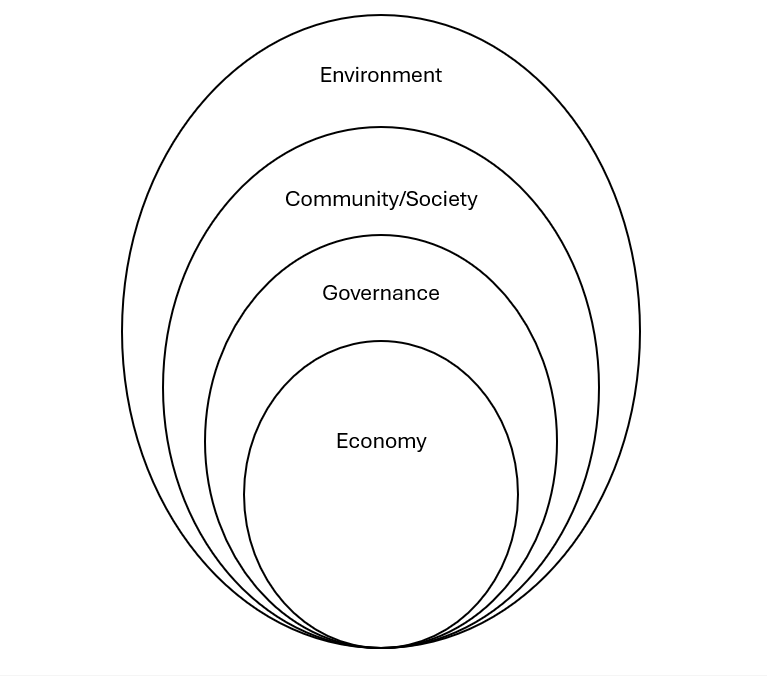
    How about the nested diagram? Here, we can encapsulate the vastness of the economic problem and shrink it, effortlessly, to fit within the constrains of the environment. Voila! An economy that is right sized.

    It looks a little like this:

    Look at that! No longer do we need to struggle to balance a hungry economy with a finite planet or an exhausted and disconnected peoples. Instead we see that the economy’s rightful place is seated neatly within the context of good governance, which in turn sits within the context of good relationship, which in turn is comfortably homed within the confines of a limited, balanced and healthy ecosystem.

    No longer are we, misguidedly, giving the economy an equal weighting of importance. No, without the economy governance, relationships and environment can continue.

    Without people the environment will happily carry on, but the need for governance or an economy merrily vanishes. Snap!

    Without the environment, there is nothing.

    Now there may be some debate over whether governance is needed. In fact, I have read one champion of cryptocurrency declaring that part of the allure of cryptocurrency was its existence outside of the existing governance structures. That is all an experiment that I don’t feel qualified to comment on, however, my personal sense is that an economy requires some form of governance, as the economy in itself has just one value: more, which is not enough to maintain civility let alone propriety.

    I would like to see the nested model overtake the venn model (does anyone remember the three pillars model? That was early sustainability talk. The venn took over and now the nest needs to succeed them both).

    The test that nest is best is simply this: take away one element and what remains? If environment everything else distintegrates, if people well the environment happily continues on its way, and if economy why those ingenious people manage to find another way to exchange value. Weighting economy equally with both environment and society is old-school thinking. It’s time to put things in their rightful places.

  • How to run an event using Community Development principles.

    I’m taking all my highly tuned community development skills (just joking) and applying them to my own community.

    There’s something about doing community development as a job – you don’t tend to bring it home. I hate to be preaching what I don’t practice, and practicing what I’m preaching gives me a chance to learn from the job, from the inside out as it were.

    So, with all these CD skills tucked under my belt, and with my LinkedIn feed stuffed full of professional interests, when a documentary popped up with a dilemma attached (the guy had no one to screen his film!), I thought: “well, I’ll do it.”

    So I set about doing it.

    But, just as this guy (Martin, as it turns out. Lovely fellow) had no idea how to go about getting a film publicly screened following production, so I really had not much of an idea of how to get something like this off the ground in my own suburb, as an individual.

    So I pulled out tool number 1

    Tool #1: Talk to everyone you think might possibly be interested in your idea – about your idea.

    I talked to friends, colleagues, associates from long ago and people I bumped into in the street, basically anyone I thought might actually have an interest in the film. It was that last one that actually got me a lead.

    Talking to people is a good trick. It commits you. So, I said I was going to screen a film and now I have to do it. If I didn’t talk about it then it would just be another one of those, “oh yeah, I was going to do that” (but was I, really?) No, it’s only when you talk about it and commit to it that you get half way there.

    Then I came across problem #1: find a venue! Which took me to tool #2.

    Tool #2: Find a venue!

    Community needs a place to meet! This is essential and it is HARD TO FIND! This is the learning of years of community development. Venues just are hard to come by. In our case a very much-loved local watering hole turned out to be the ideal venue. Warm, hospitable, cozy, and staffed! It beat a community hall hands down. Why? It was free! Sales of drinks and dinner would help cover their costs. A cut from ticket sales would help if needed. Tables, chairs, sound system – all already there. Promotion – sorted through their existing platforms and loyal following.

    So, a lesson there, something we probably all already knew, but something to keep on hand as a not-so-secret tool in future. Cafes are our modern day meeting places our community hubs, our oases, our promenades, our clubs. If cafes knew this then maybe they would be more adventurous in extending their events schedule to welcome more community driven initiatives.

    *note that a cafe is not suitable for many community run initiatives such as yoga classes, get-fit-quick groups, educational type workshops, capoeira and the like, but it suited this one.

    Date and time have been set, bringing me to Tool #3 of How to run an event using Community Development principles.

    Tool #3: Talk, a lot. Have lots of conversations.

    Leading us nicely to tool #4.

    Tool #4: See what arises. This is a new kind of project management. It is project midwifery.

    First, we found our people, then we found our place, now we need to find out what the people and the place bring into being. AND THEN, VERY IMPORTANT (hence the CAPS) we need to sit back a little and watch the magic. Occasionally you might urge someone to PUSH or breathe, but you are not the one doing all the work. You are midwifing.

    The Community Development way is to trust the alchemy of people. First you connect the people, then you leave them to it. Conversation births ideas. Ideas can then become action. Place is an important container of these ideas and action. We are physical beings constrained to our locations (though it doesn’t always seem that way on the www, but take away the roof over your head and you’ll soon feel the effects of place while you scroll).

    So I had conversations. There were two people who were interested in bringing the intellectual and passive experience of watching a film into a bodily experience. I brought them together to talk about how we would bring a physical experience of the film into the room. We talked about table set up, about using tech (pen and paper) to create a personal connection with the ideas from the film, we explored a non-verbal, low contact activity to break the ice. We also spoke about putting too much pressure on the audience (I mean, they probably just want to get back home to put the kids to bed), so we tried to cover as much territory as possible, thinking about who the audience would be, how much time we had to explore, what we should be asking people to commit to (nothing, was the answer!). Rich conversation, bringing forth ideas. 90% of which will be scrapped or left for another time, but in the midst some gold. Brainstorming is like gold mining, you’re sometimes just picking up the flecks. It’s still worthwhile, just for those flecks.

    We’re now at this point in the puzzle. Let’s see what CD tools I’ll need to pull out as we lead into the next two months. The film shows on 13 November!

  • What I learned from Mohammed Ali

    Last night I had the great joy and privilege of attending HelpingACT’s fundraising dinner at Taj Agra in Dickson.

    HelpingACT “began” in about 2018 with a conversation between two men, Mohammed Ali and Manar Ahmad, with the simple goal of ensuring that no person in Canberra would sleep hungry. Since then this simple mission has galvanised a whole community of people eager to connect over the mission of helping others.

    They received their Registered Charity status only several days ago and so the call was made to host a dinner before the looming end of financial year in order to allow others to take advantage of this little benefit.

    In a spirit which I’ve only ever seen Mohammed Ali generate almost everyone in the room had the chance to say something. As the prepared speeches finished Mohammed began to call on people at a moment’s notice to step up and say something while also calling on us all to continue to enjoy ourselves, enjoy the good food, enjoy the music, enjoy the good conversation. Have fun, laugh and love.

    By the time he called on me I could think of only one thing to say and it’s something that I have learned through Mohammed over the past two years in which I’ve had the privilege to come into his orbit. That is, love.

    Mohammed galvanises people because he loves them and because he has learned how to show them that he loves them. He loves the politicians, the media personalities and managers, the refugees and those he helps all equally. He helps people because he loves them and he also loves to enjoy life, eat and celebrate with the people he loves.

    He equally respects and honours everyone’s contribution and everyone’s story and he is genuinely touched by people’s difficulties and is not scared to bring these stories to the light of day, inviting people to share in the safe space he creates.

    I remember once that his advice about speaking in public was simply to speak from the heart.

    Talking about love is not the corporate thing to do. I’ve been to many awards nights and fundraising dinners where us humans try our darndest to be less human, to bring what we perceive to be ‘our best selves’ into the room. As my cousin said about a new position, “I have to wear a suit and speak funny”, and I laughed because it is true. Being part of the corporate world can be to don a costume and adopt a vernacular which squeezes us humans into the armour of productivity. We can be all too eager to show that we’re worth it, that we’re successful, that we’re like all the other successful, well-put-together people in the room.

    But, there is another way and I never saw it until I met Mohammed.

    The enemy of love is fear. There is a lot of recentish talk about how safe workplaces are the best workplaces. Employees/staff/team members need to feel like their workplace is a safe space to express their ideas, to have a break and enjoy each others company, as it’s been shown that good relationships within the workplace lead to measurable productivity. Until we manage to measure and value other things such as quality of life, richness of experience, connectedness and actual benefits to our environment we can assume that these things too are improved through the natural sport of human beings congregating, communicating and caring. For a great little video on this see Margaret Heffernan’s TED Talk, Forget the Pecking Order at Work. This video, I’m happy to say, was shown to me through graduate studies in Management – so the culture is changing.

    Unfortunately, we have inherited an industrial workplace structure, based on distrust and power (for a great book about this, read the classic book, The Ragged Trousered Philanthropists by Robert Tressell). Performing to a set of KPI’s, watching our words in case of accusation, managing our emotions so as to maintain professionality, kurbing your enthusiasm and silliness! To be sure, some of the best workplaces I’ve been in are where the boss – the CEO – is happy to be a little bit silly. It sets an amazing culture of acceptance.

    Great is the CEO who strikes a balance between passion, hard work and good humour.

    Public speaking especially is often fraught with fear that we will say ‘the wrong thing’ but on the times I’ve opened up about my own story I’ve been surprised by the reactions. It seems we’ve all been there. We’ve all struggled, we’ve all needed a leg up at some point in time. We do carry our personal relationships with us into the workplace. Our mothers and fathers do still loom over us even there. We all still do need reassurance that we are loved. We need to feel valued, we need to feel respected, we need to feel safe.

    Mohammed Ali taught me, and is teaching me, how to create these spaces of safety.

    We thank people. We show our own hearts. We act a little silly to relax the atmosphere. We lose our own self-consciousness so that others drop theirs. We listen with our whole bodies. We enjoy ourselves and invite others to do the same.

    For Mohammed running a charity that feeds people is not about doing good because it’s the right thing to do or because he wants to see change, or because of a religious conviction. Running a fundraiser is not about extracting as much money out of people as possible. It’s about inviting others in to share in the generous experience of life. It’s about enjoying life together, because how can any of us enjoy our own lives fully when we know there are others struggling, sleeping rough or sleeping hungry. We are connected. Our experiences ripple out through time and space and affect one another. If my brother is hungry then I too may as well be hungry. If I am scared then others become more scared.

    Mohammed Ali taught me how to love well. He showed me that we can love in the corporate world, that in fact, we must. He showed me that helping is as much about loving myself as it is about loving others.

    If we really want to be part of changing the world then we have to love others as if they are ourselves. We have to love our earth as if it is ourself. In a way this does entail some sacrifice in order to ensure there is a fair share among all (which includes a fair share for our planet to continue to regenerate and thrive). This could be illustrated in an alternative Venn diagram below.

    Venn diagrams aside, the point is, if we love others and if we love our planet and if we realise that our fullest experience of life is dependent on them also thriving then it’s easy to not take too much. It is easy to consider our own purchases, it is easy to moderate our own wealth in order to share the wealth around because we can not be deeply happy unless our brother or sister is also happy and we can not truly thrive unless our own planet is thriving. If this means we have to cut down on plastic, cut down on travel, cut down on the number of houses we own so that others have a chance at housing security, shrink that “me” circle back to its right size, so that we are not consuming 4.5 planet’s worth of resources while others are consuming mere crumbs, then that’s ok because it’s about all of us together, not one of us alone.

    Mohammed Ali taught me that we are better together. We are better when we are deeply connected to our community through love.

    What better lesson is there.

  • Why Markets?

    Markets are one of the oldest forms of commerce and trade and they are enduring.

    Canberra is full of local markets, though this is only fairly recent with the Capital Region Farmer’s Market arriving on the scene in 2004 and the Handmade Markets following soon after in 2008. These followed the original and gigantic Old Bus Depot Markets by over a decade! By my estimation these are the three largest markets on Canberra’s calendar and arrived well before some of the many others followed including the Southside Farmers Market in 2013, The Forage in 2014, the Night Noodle Market came to Canberra in 2015 (interestingly brought to us, and Australia, by the Fairfax group, and notably part of the Enlighten Festival) and the most recent arrival, the Haig Park Village Markets.

    Through the year all sorts of other markets crop up on the calendar including many Christmas Markets of either Scandinavian or the Eco variety, the Alliance Francaise Markets and even a new Christmas in July Market coming in 2022 with a French twist.

    I am a traditionalist and while I’ve poked my head in at many of the above my favourite is the weekly Farmer’s Market. I love it for its lack of pretension, its utter practicality, its simplicity and its simple service – with an aim to get produce directly from the producer to the consumer. It meets a need with no fluff, of which I am always wary and slightly cynical.

    Markets generally tick lots of great boxes including: incubating small business, supporting resilient food networks, reducing income disparity, building community, promoting health and active living, providing opportunities for creativity and collaboration and generally increasing the vibrancy and choice available in a town or city.

    My fascination is with what it is exactly that piques people’s interest and what draws them to something like a market. Is it the promise of discovering the unexpected? Exploring new territory – even though temporary? Gathering together like the tribal animals we seem to be? Having our senses overwhelmed or gently coaxed? Or is it that we’re subconsciously aware of the inherent good of a market (see above)? Nutting these things out can show us how to run great markets in the future.

    Market Cities recognises the value of markets, including these indirect benefits and their website houses a trove of articles, research reports and publications on the value of markets around the world, including as social hubs or ‘third places’ where people can almost rely on bumping into eachother, a form of social engagement that is not really recognised but seems to be deeply comforting. It is, perhaps, our ingrained tribalism.

    Independent sellers protect their markets with a fierce passion – fierce because that is what it takes to protect their industry and creativity from becoming strangled by the overwhelming financial and legal obligations that come with more institutionalisation. A market provides a point-of-sale that is affordable and easily accessed by both customer and retailer and this must be protected from commercialism at all costs.

    I’ve now had the privilege of being part of starting a new market in Canberra. One thing that it is important to recognise and encourage is: Allow time for it to grow. It is ok to start small. Something has to come first. Either the retailers take a risk or the customers take a risk. It can be hard to match each one up at the same time. Keep communicating with customer and your sellers, admit that it’s not going to be perfect at first. You have to build capacity – that is better than putting on a show.

    From little things good things will grow.

  • A Philosophy of Dialogue (Martin Buber)

    In this blog-series I explore the various philosophies which have shaped, are shaping or (imho) should shape community development work. Search for the tag: #CDPhilosophy to find all related posts.

    Martin Buber is one of the best places to start when it comes to Community Development Philosophies. His simple, but powerful Philosophy of Dialogue, consisting of the “I-Thou” relationship, is little known but essential to engage in when working with people, particularly diverse people who sometimes come together with apparently little in common.

    In fact the recent move of some toward gender fluidity can be seen to relate to this “I-Thou” approach. In many ways the call to change pronouns requests that people look beyond a person’s apparent gender to consider the nuance of a person’s being and identity. One can do this while maintaining gendered pronouns, but by bringing pronouns to the fore it does force others to consider thinking about the unique stories people bring into their lived experience.

    I believe that adopting a philosophy of “I-Thou” and developing a deep understanding of this approach is more powerful than asking others to change gendered pronouns as it is likely that adopting ‘they’, alongside ‘he’ and ‘she’ will just become a ‘third gender’ with little understanding of the intent behind it. There is also no way two, three or even four or five pronouns can capture all the variance of the human experience, therefore we risk not allowing our limited vocabularies to rightly accommodate true diversity if we stipulate that our language must be precise to the point of legal speech in daily life – and in fear of causing offence, language actually becomes a barrier instead of a doorway to understanding.

    Adopting a philosophy to inform the way one relates to other people (i.e. knowing why you do something) is more powerful than changing a behaviour due to common practice or because you have been told/asked to do so. A rigorously examined personal philosophy is transformative rather than prescriptive.

    So, what is the Philosophy of Dialogue? What does it mean to adopt an “I-Thou” approach?

    It is very simple really.

    It is coming to someone without any assumption of who they might be based on what you see in front of you, what you have heard about them or what you assume based on what you can see (e.g. their gender, the colour of their skin, their size, their obvious abilities, and so on). On approaching a person you approach to deeply listen, to allow time and space to truly connect as beings, to be open to sharing yourself (the “I”) and open to truly hearing and understanding the other (the “thou”). It is turning the objective “you” into the subjective “thou” and allowing the “I” to be seen.

    I hope you can see that this distinction is a subtle but powerful shift in approach. It is where Asset Based Community Development needs to begin, where a “culture of silence” is confronted and where a Critical Pedagogy can be established.

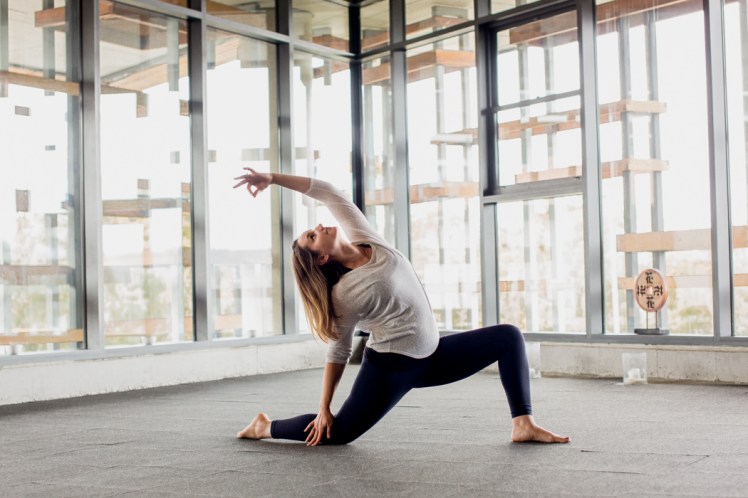
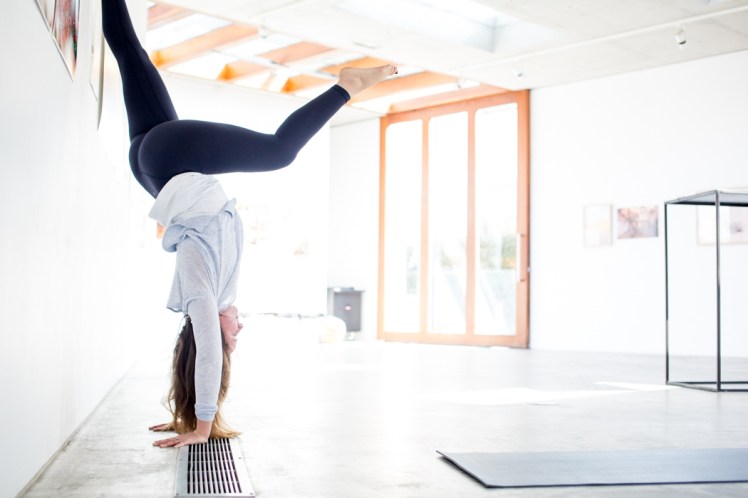
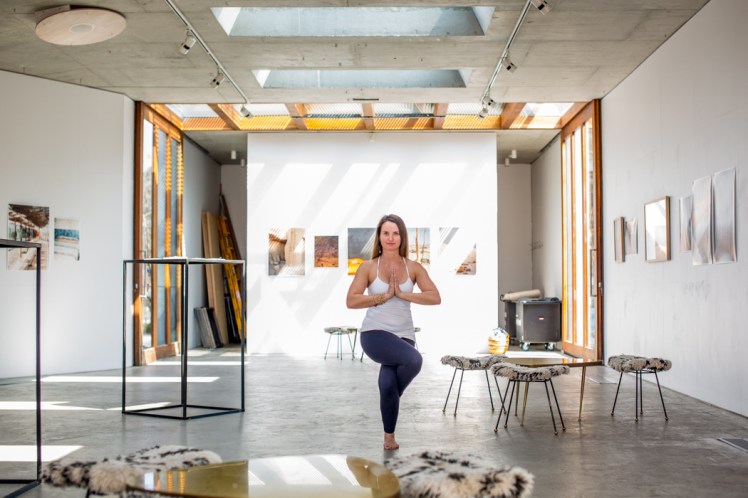
  • Flow Yoga Canberra

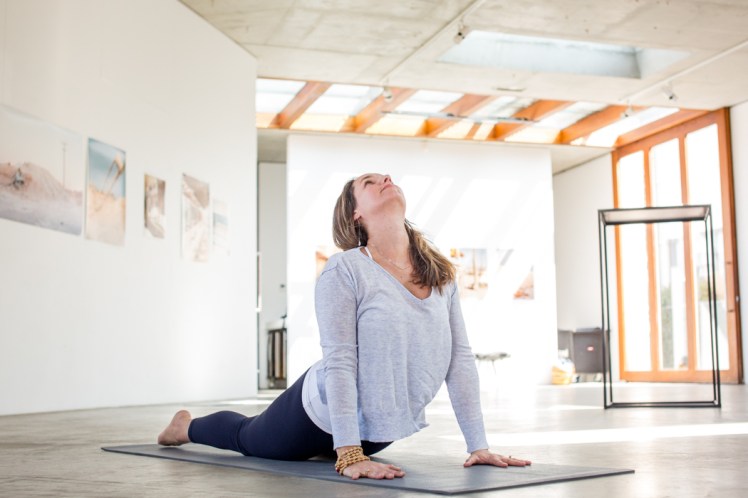
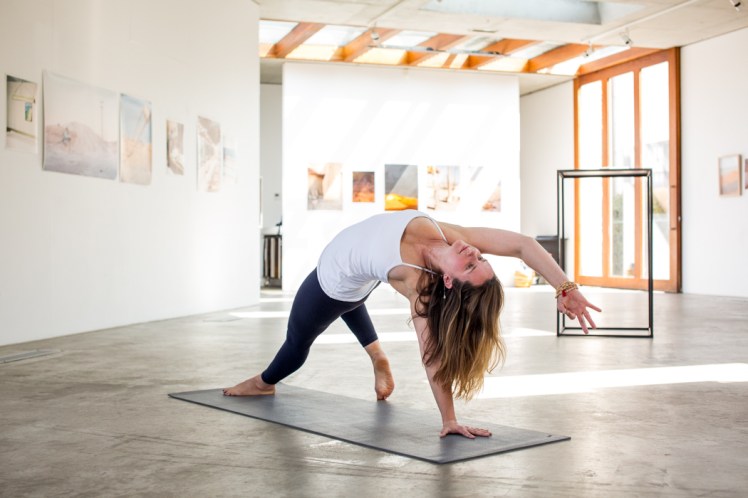
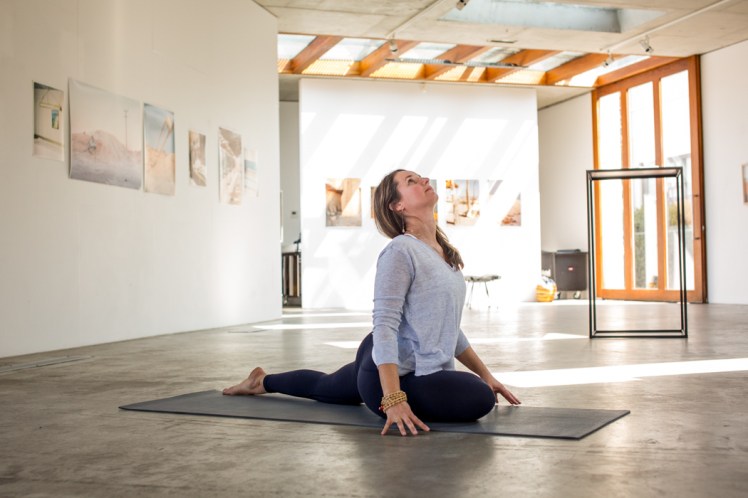
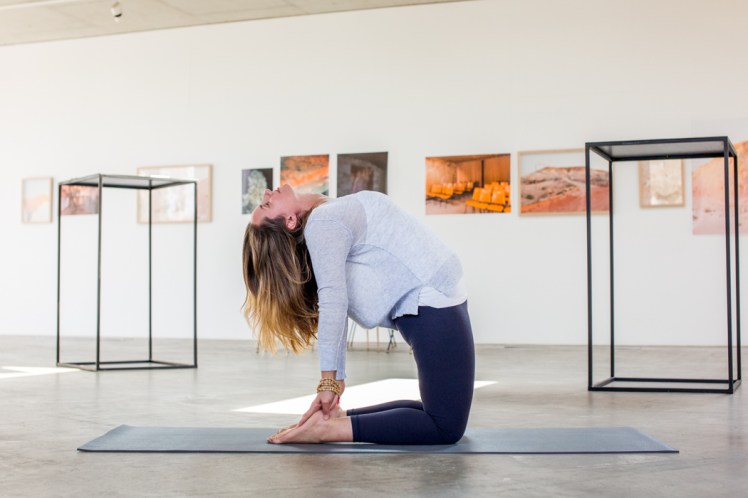
    I went to upload these and couldn’t believe they were dated 2018 when I took them! I’ve clearly been very backward in uploading any of my photos over the past few years.

    I count myself extremely privileged to call Odona a friend. At her recent studio launch, she was said to be the fourth kind of person described by Buddha, who is in brightness and extending brightness into the world. From my experience this is true and I have learned a lot from being around her brightness. Her recent Flow Yoga Canberra studio launch was at the Dairy Flat Road precinct in a beautiful, purpose built studio where she will be teaching along with other passionate Yogis, Yoginis and wellness practitioners. I am looking forward to practicing there myself!

    These photos are now dated. Nothing remains the same but we can celebrate what was as well as what is and what is coming.